Swiss news
17.03.2025

Last Update: 10.04.2026

Swiss company registration

Successful entrepreneurs choose to do business in Switzerland and not by chance. The key points are a transparent economy, a high standard of living, and stability. However, it is essential to understand the company registration Switzerland process before you begin and how to get Swiss company registration number.

Swiss company registration

Advantages of Registering a Company in Switzerland

Switzerland consistently ranks in the top three of the World Economic Forum’s Global Competitiveness Index and the IMD World Competitiveness Ranking. The advantages that attract international founders to Swiss company registration are grounded in federal law and bilateral treaties:

  • Moderate corporate tax: federal corporate income tax is 8.5% on pre-tax profit (effective 7.83% on after-tax profit) under Art. 68 of the Federal Direct Tax Act (DBG, SR 642.11). Cantonal and communal tax varies: the combined effective rate is 11.85% in Zug, 11.97% in Nidwalden, 12.20% in Lucerne, 14.60% in Schwyz, 13.00% in Basel-Stadt, 14.00% in Geneva, 19.70% in Zurich and 21.04% in Bern.
  • Participation exemption: dividends and capital gains from qualifying participations (≥10% stake or CHF 1 million market value) benefit from the participation exemption under DBG Art. 69-70, effectively eliminating economic double taxation within corporate groups.
  • Double tax treaty network: Switzerland has concluded more than 100 bilateral double taxation agreements, including UK, Germany, France, Italy, United States, UAE, Singapore, India and China.
  • Legal certainty: the Swiss Code of Obligations (Obligationenrecht, OR, SR 220) has been stable for over a century with incremental reforms. The 2023 corporate law reform modernised the AG (Art. 620-763 OR) and GmbH (Art. 772-827 OR) provisions.
  • No currency controls: free cross-border movement of CHF, EUR, USD and any other currency. No restrictions on dividend repatriation or capital transfers.
  • EU market access: although Switzerland is not an EU member, the bilateral agreements (Bilaterale I and II) cover free movement of persons, goods, services and mutual recognition of professional qualifications.
  • Stable currency: the Swiss franc (CHF) has maintained its purchasing power through every global recession since 1971 and is one of the five most-traded currencies worldwide.
  • Rule of law: an independent judiciary, transparent commercial registry (Handelsregister) and well-developed arbitration infrastructure (Swiss Rules of International Arbitration) protect commercial interests.

Every company registered in Switzerland receives a unique identification number (UID, Unternehmens-Identifikationsnummer) issued by the Federal Statistical Office under the Federal Act on the Company Identification Number (UIDG, SR 431.03). The UID is published on zefix.ch and is required for all official correspondence.

Related reading: Swiss GmbH formation, AG vs GmbH comparison and formation costs breakdown.

Business visa to Switzerland

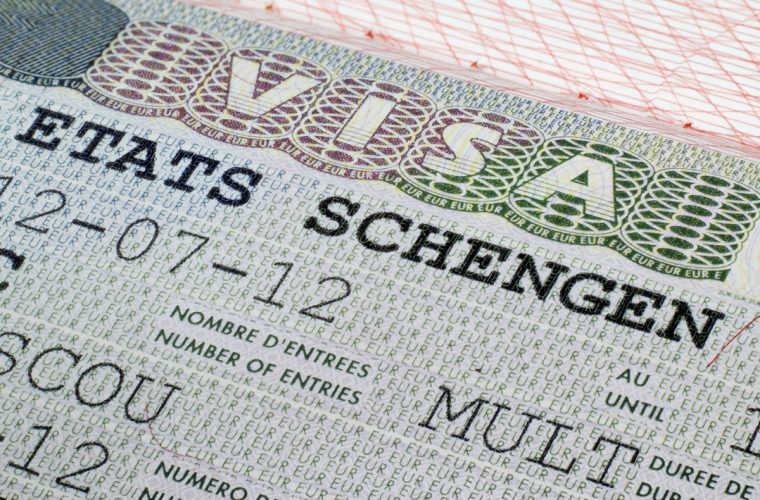
A visa category “D” and the corresponding permit from the cantonal authorities will be required for a legal stay of more than three months in the confederation territory. The Swiss consulate issues visas in all countries.

Business visa to Switzerland

Would you talk with someone in our company regarding any issues? Just drop us a line!

Swiss Legal Forms for Company Registration

Swiss law under the Code of Obligations (OR, SR 220) offers several legal forms. The three most relevant for international founders are:

Legal formKey requirements
Aktiengesellschaft (AG) — Swiss CorporationGoverned by OR Art. 620-763. Nominal share capital CHF 100’000, of which at least CHF 50’000 or 20% of nominal capital (whichever is greater) must be paid in at registration (Art. 632 OR). Minimum one founder (natural or legal person). At least one member of the board of directors with individual signing authority must be resident in Switzerland (Art. 718 para 4 OR). Shareholders are not named in the Handelsregister — only the board of directors is published. Free transferability of shares (Art. 684 OR). Swiss AG formation guide
Gesellschaft mit beschränkter Haftung (GmbH) — Swiss LLCGoverned by OR Art. 772-827. Nominal share capital CHF 20’000, fully paid in before Handelsregister registration (Art. 773 and Art. 777c OR). Minimum one founder. At least one Geschäftsführer with individual signing authority must be resident in Switzerland (Art. 814 para 3 OR). All quota holders are listed by name in the Handelsregister. Transfer of quotas requires shareholders’ meeting approval (Art. 785 OR). Swiss GmbH formation guide
Einzelunternehmen — Sole ProprietorshipNo minimum capital requirement. Registration in the Handelsregister is mandatory once annual turnover exceeds CHF 100’000 (Art. 934 OR). The sole proprietor bears unlimited personal liability for all business obligations. This form is suited for freelancers, consultants, medical practitioners and lawyers operating under their own name.

Other legal forms include the Kollektivgesellschaft (general partnership, Art. 552-593 OR), the Kommanditgesellschaft (limited partnership, Art. 594-619 OR), and the Genossenschaft (cooperative, Art. 828-926 OR). For holding structures, the AG is the preferred legal form due to shareholder privacy and the participation exemption under DBG Art. 69-70.

Conversion between legal forms (e.g., GmbH to AG) is possible under the Swiss Merger Act (Fusionsgesetz, FusG, SR 221.301) without dissolving the original company.

Buying an Existing Business in Switzerland

Purchasing a ready-made shelf company or an operating business is a viable alternative to new registration. A shelf company (Vorratsgesellschaft) is already entered in the Handelsregister with a UID, bank account and clean history — the buyer acquires 100% of the shares and can begin trading immediately.

Before purchasing, the buyer should conduct legal and financial due diligence covering: the most recent annual accounts under OR Art. 957-963b, outstanding tax liabilities at cantonal and federal level, pending litigation, employment contracts, and compliance with the Anti-Money Laundering Act (GwG, SR 955.0). The share purchase agreement (SPA) must be executed in writing, and for GmbH quota transfers, a public deed is required (Art. 785 para 1 OR).

Goldblum und Partner AG at Baarerstrasse 25 in Zug maintains an inventory of pre-registered shelf companies (both AG and GmbH) in Zug, Zurich, Lucerne and Nidwalden, ready for immediate transfer.

FAQs

The three main legal forms are the Aktiengesellschaft (AG, Swiss corporation) under OR Art. 620-763 with CHF 100’000 nominal capital, the Gesellschaft mit beschränkter Haftung (GmbH, Swiss LLC) under OR Art. 772-827 with CHF 20’000 nominal capital, and the Einzelunternehmen (sole proprietorship) with no minimum capital. The AG and GmbH both provide limited liability.

For a Swiss AG: CHF 100’000 nominal share capital, of which at least CHF 50’000 must be paid in at registration (Art. 632 OR). For a Swiss GmbH: CHF 20’000 fully paid in before Handelsregister entry (Art. 777c OR). The capital is deposited into a blocked account (Kapitaleinzahlungskonto, Sperrkonto) at a Swiss bank and released after registration.

A standard AG or GmbH registration takes 2-4 weeks from notarisation of the deed of incorporation to the first entry in the Handelsregister. The timeline depends on Sperrkonto opening (3-10 business days), notary scheduling, and the workload of the cantonal commercial registry. Zug and Nidwalden are among the fastest cantons.

Yes. Swiss law places no nationality or residence restriction on shareholders or founders. However, at least one director (AG, Art. 718 para 4 OR) or Geschäftsführer (GmbH, Art. 814 para 3 OR) with individual signing authority must be resident in Switzerland. Goldblum und Partner AG provides qualified resident director services for foreign founders.

A notarised deed of incorporation, articles of association (Statuten), Stampa and Lex Friedrich declarations, a capital-payment confirmation (Kapitaleinzahlungsbestätigung) from a Swiss bank, certified passport copies of all founders and directors, and a consent to act (Annahme des Mandats) for each director. The Handelsregister application is filed by the notary.

An AG requires CHF 100’000 nominal capital (CHF 50’000 minimum paid in, Art. 632 OR), names only the board in the Handelsregister, and allows free transferability of shares. A GmbH requires CHF 20’000 fully paid in (Art. 777c OR), lists all quota holders by name, and restricts transfers (Art. 785 OR). Both forms provide limited liability and can be converted under the Merger Act (FusG).

Federal corporate income tax is 8.5% on pre-tax profit (effective 7.83%) under DBG Art. 68. Cantonal and communal tax varies: Zug 11.85%, Nidwalden 11.97%, Lucerne 12.20%, Basel-Stadt 13.00%, Schwyz 14.60%, Geneva 14.00%, Zurich 19.70%, Bern 21.04%. VAT is 8.1% standard, 2.6% reduced, 3.8% accommodation (MWSTG, SR 641.20).

Yes. The share capital must be deposited into a blocked capital account (Kapitaleinzahlungskonto, Sperrkonto) at a Swiss bank before the notarisation of the deed of incorporation. After the company is entered in the Handelsregister and published in the Schweizerisches Handelsamtsblatt (SHAB), the bank releases the funds to the company’s operating account.

Annual general meeting (Art. 698 OR for AG, Art. 805 OR for GmbH), commercial accounting under OR Art. 957-963b, annual corporate tax filing, VAT registration and filing once turnover exceeds CHF 100’000 (Art. 10 MWSTG), audit if thresholds are met (Art. 727 OR: CHF 20 million balance sheet, CHF 40 million turnover, 250 FTE), and beneficial-owner disclosure (Art. 697j OR).

Yes. A shelf company (Vorratsgesellschaft) is already registered in the Handelsregister with a UID, bank account and clean history. The buyer acquires 100% of the shares and can begin trading immediately. For GmbH quota transfers, a public deed is required under Art. 785 para 1 OR. Goldblum und Partner AG maintains an inventory of shelf companies in Zug, Zurich, Lucerne and Nidwalden.

The UID (Unternehmens-Identifikationsnummer) is a unique company identification number issued by the Swiss Federal Statistical Office under the UIDG (SR 431.03). It is assigned automatically when the company is entered in the Handelsregister and published on zefix.ch. The UID is required for all official correspondence, tax filings and VAT invoices.

EU/EFTA nationals can enter Switzerland without a visa under the bilateral Agreement on the Free Movement of Persons (FZA). Non-EU/EFTA entrepreneurs planning to stay longer than 90 days need a category D visa and a cantonal residence permit (B permit). Company registration itself does not require the founder to be physically present in Switzerland — Goldblum und Partner AG can handle the entire process with a power of attorney.

Would you talk with someone in our company regarding any issues? Just drop us a line!

Meet us in Zug

lawyer-in-germany

Call us now at +41 44 500 22 50 to set up an appointment with our experts in Zug, Switzerland. As our client, you will benefit from the expertise of our local consultants for opening a company in Switzerland.

We offer:

  • cost-efficiency: competitive company formation prices;
  • prompt response to your inquiry (maxim 24 hours);
  • free and complete legal information featured on our site, at your disposal.

Testimonials

Michael Schmidt
Lucas Schmid

Working with swisscompanyformation.com has been an exceptional experience. Their team provides comprehensive support for all legal aspects of company formation in Switzerland, ensuring a smooth and efficient process.

View all testimonials

Last news