
Business
The CFO's Role in a Swiss Company: Responsibilities and OR Art. 716a Duties
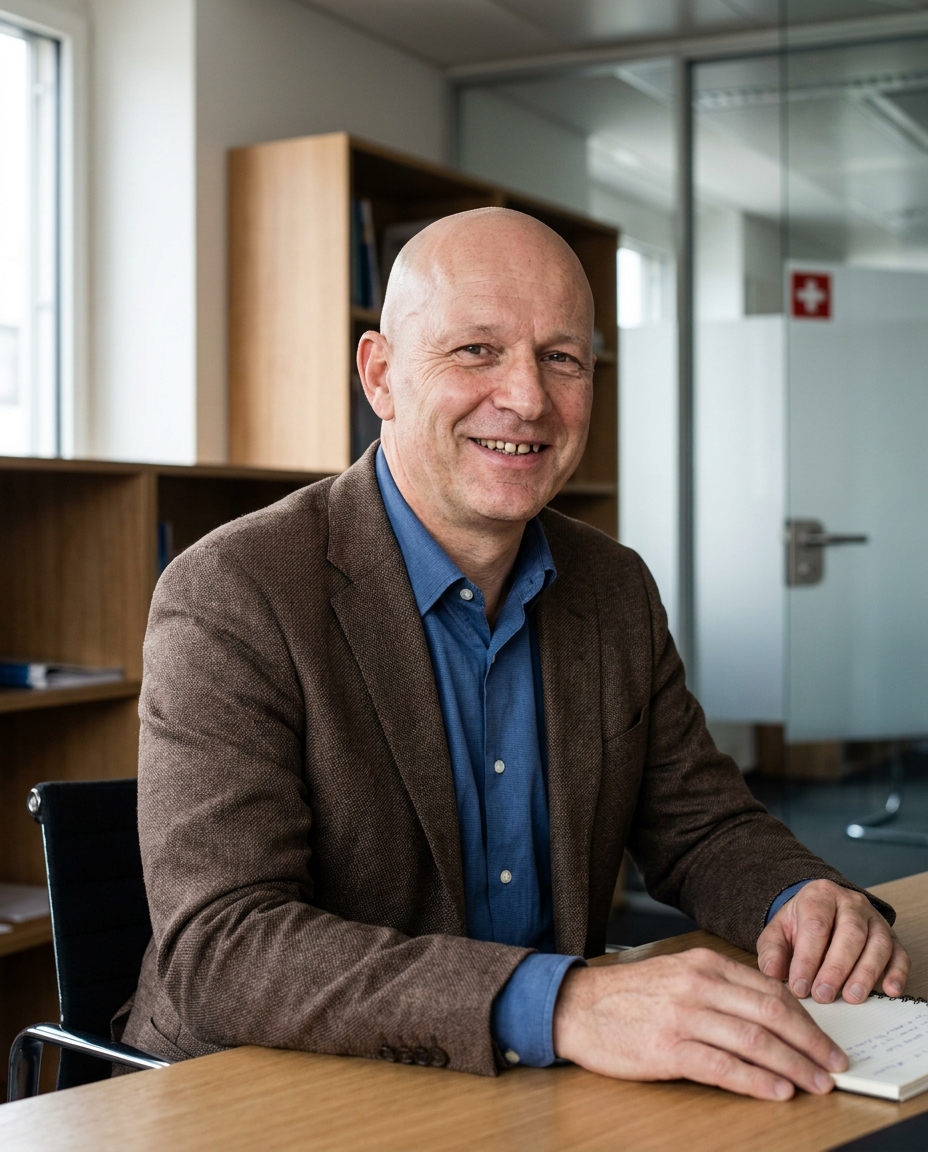
Stefan Brunner
Senior Legal Advisor
26 April 2026
7 min read
In a Swiss AG, the Verwaltungsrat (board of directors) is the primary statutory organ. The CFO title exists in practice but has no independent legal standing under Swiss corporate law. Understanding this distinction — and knowing where board responsibility ends and CFO authority begins — is essential for anyone structuring a Swiss company's finance function.
The board's inalienable duties under OR Art. 716a
OR Art. 716a lists the duties the board of directors cannot delegate to management, regardless of company size or internal structure. These inalienable duties (unubertragbare und unentziehbare Aufgaben) include:
- ●Ultimate direction of the company and issuing necessary directives
- ●Determining the organisational structure of the company
- ●Financial planning — including ensuring adequate financing and monitoring the financial situation
- ●Establishment of financial controls — the board must ensure financial reporting is in place and functioning
- ●Oversight of persons entrusted with management (including the CFO)
- ●Preparing and executing resolutions of the general meeting
- ●Notifying the court in cases of over-indebtedness (OR Art. 725b)
The practical consequence: a CFO can prepare financial statements, file tax returns, and run treasury — but the board retains legal responsibility for the accuracy of the accounts and the adequacy of internal controls. This is not a formality. Swiss courts have consistently held board members liable even where a CFO or Treuhander was engaged.
Typical CFO duties in Swiss SMEs
Infographic
The CFO Role — Key Responsibilities
Modern Swiss CFO scope across finance, strategy, and operations
3 areas
Core mandate
Financial reporting & compliance + treasury & cash management + strategic planning.
Board
Primary reporting line
CFO reports to CEO and presents financial results directly to the Board of Directors.
3–7 yrs
Average CFO tenure (Swiss SME)
Shorter in high-growth companies; longer in established family-owned businesses.
60%
Time on strategic vs. operational
Modern CFOs allocate 40-60% of time to strategic decisions, not just financial reporting.

Statutory accounts
The CFO prepares annual financial statements under OR 957–963, comprising the income statement (Erfolgsrechnung), balance sheet (Bilanz), and notes (Anhang). For larger companies subject to ordinary audit, an additional cash flow statement and management report (Lagebericht) are required. The accounts must comply with Swiss GAAP (OR-Rechnungslegung) at minimum; larger groups may use Swiss GAAP FER or IFRS.
Management reporting
Monthly reporting to the board: P&L versus budget, cash flow forecast, key variance analysis, and KPI dashboards. The CFO translates operational numbers into board-level intelligence. Under OR Art. 716a, the board must be in a position to monitor the company's financial health — the CFO's reporting function is what makes this possible.
Tax filings
Swiss companies face multiple tax filings: direct federal tax (Direkte Bundessteuer, DBG), cantonal and municipal corporate income tax (Staatssteuer), VAT returns (MWST, quarterly or annual), and withholding tax declarations (VStG) on dividends. The CFO or Treuhander coordinates these, though the board bears ultimate liability for accurate filing.
Payroll and social insurance coordination
AHV/IV/EO declarations to the cantonal compensation office, BVG (occupational pension) coordination with the pension fund, and Quellensteuer (withholding tax on wages) for foreign employees without a C-permit. These obligations are monthly and penalties for late payment are automatic.
Banking and treasury
Maintaining banking relationships, managing signatory authority protocols, cash pooling arrangements for group structures, and FX risk management for internationally active companies. Swiss banks require ongoing KYC updates; the CFO is typically the primary relationship contact.
Audit thresholds: ordinary, limited, and opting out
Whether your Swiss company requires a statutory audit depends on size thresholds under OR 727 and 727a. The CFO must know which category applies — it determines the level of external scrutiny and the reporting requirements.
| Audit type | Threshold | Auditor requirement |
|---|---|---|
| Ordinary audit (ordentliche Revision) | Any two of: revenue > CHF 40M, balance sheet > CHF 20M, > 250 FTE; OR listed company; OR subsidiary of audited group | Licensed audit firm (RAB-registered) |
| Limited audit (eingeschrankte Revision) | Below ordinary thresholds; OR shareholders with > 10% requesting it | Licensed auditor (individual or firm) |
| Opting out (Verzicht auf eingeschrankte Revision) | All shareholders consent; no more than 10 FTE (full-time equivalent) | No statutory auditor required |
Most small foreign-owned Swiss companies opt out of the limited audit, provided all shareholders consent unanimously and the company employs no more than 10 FTE. The CFO must document this consent in the corporate records and ensure it is renewed when share ownership changes.
Infographic
CFO Time Allocation — Modern vs Traditional
How a modern Swiss CFO allocates working time
Personal liability of the CFO
Although the CFO is not a statutory board member, personal liability can attach under OR Art. 754. This provision applies to "all persons who are entrusted with the management or supervision" of the company — which courts have interpreted to include senior executives, including CFOs, external fiduciaries, and even de facto managers who exercise managerial authority without formal title.
Liability requires: a wilful or negligent breach of duty, loss to the company or creditors, and a causal link between the breach and the loss. Tax liability can also flow personally where a company is insolvent and the CFO (or board) failed to take timely action. The ESTV (Federal Tax Administration) has broad recovery powers against responsible persons in cases of company insolvency.
In-house CFO vs outsourced: when to make the transition
| Stage | Typical headcount | Recommended approach | Rationale |
|---|---|---|---|
| Startup / early stage | 1–5 employees | Outsourced Treuhander / CFO-as-a-service | Volume of transactions too low to justify full-time hire; fiduciary handles accounts, tax, payroll |
| Growth / scale-up | 10–50 employees | Fractional CFO or outsourced with in-house bookkeeper | Growing complexity; fractional CFO provides strategic input without full-time cost |
| Established company | 50+ employees | In-house CFO | Complexity of multi-entity reporting, banking covenants, and management reporting requires dedicated resource |
The Swiss Treuhander model: In Switzerland, the CFO function for small and mid-size companies is typically performed by a licensed Treuhander (fiduciary) rather than an in-house hire. The Treuhander prepares accounts, files tax returns, handles AHV declarations, and provides board-level financial reporting — at a fraction of the cost of a full-time CFO. Goldblum & Partner provides CFO-as-a-service for Swiss companies that need strategic financial oversight without the overhead of an in-house appointment. See /services/cfo-as-a-service/.
FAQ
Frequently asked
questions
Precise answers to the most common questions about forming a company in Switzerland. For specific advice on your structure, book a free consultation.
Free consultationOfficial Sources
- Code of Obligations (SR 220)
All legal claims hinge on it — Art. 716a inalienable duties, 725/725b over-indebtedness, 727/727a audit thresholds, 754 liability, 957-963 accounting.
- ESTV — Federal Tax Administration
Page asserts ESTV recovery powers against responsible persons and federal tax (DBG) filing obligations.

Free Consultation
Ready to incorporate
in Switzerland?
Speak with a Zug advisor. We'll review your structure, recommend the optimal entity type, and outline the timeline. No commitment — no pricing barrier at entry.
Baarerstrasse 25 · 6300 Zug · Switzerland · Est. 2007