
Banking
Swiss Private Banks: Minimum Requirements, Services, and How to Apply
Stefan Brunner
Senior Legal Advisor
28 April 2026
8 min read
A Swiss private bank is a FINMA-licensed bank offering wealth management to high-net-worth clients, typically requiring CHF 500,000 to CHF 2,000,000+ in investable assets. All-in discretionary management fees usually run 0.5%–1.5% of assets under management (AuM) per year, and account opening for non-residents typically takes 2–8 weeks. Private banks differ fundamentally from retail or cantonal banks: they focus on investment management rather than transactional banking, charging on assets under management rather than per-transaction charges.
Definition: what makes a bank a "private bank"
In Switzerland, the term "private bank" (Privatbank) historically referred to banking partnerships where the partners bore unlimited personal liability for the bank's obligations — structurally analogous to a law firm partnership. This model ensured the partners had strong skin-in-the-game incentives to manage client assets conservatively. The most enduring examples of this model — Pictet and Lombard Odier — converted on 1 January 2014 to partnerships limited by shares (Kommanditgesellschaft auf Aktien), ending the partners' unlimited personal liability while preserving the partnership ethos and complying with modern regulatory capital requirements.
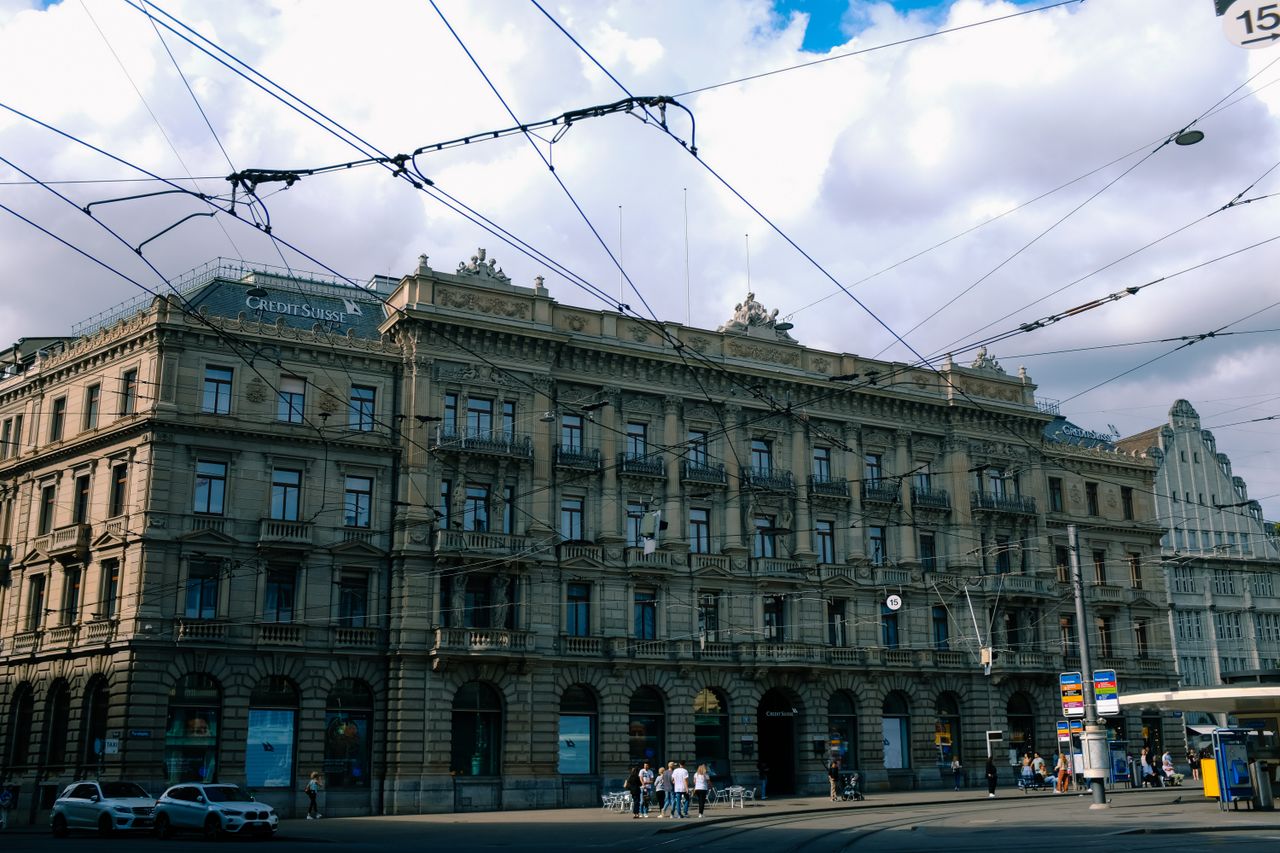
Today, the term "private bank" in Switzerland most commonly refers to any FINMA-licensed bank (Banklizenz under BankG) that focuses primarily or exclusively on wealth management services for HNW and UHNW clients — regardless of its legal form. All are subject to full BankG supervision, FINMA capital and liquidity requirements, and GwG anti-money-laundering obligations.
Minimum AuM requirements by institution
Private banks set minimum investment thresholds to ensure the account is economically viable given the service cost. These thresholds are indicative — banks routinely make exceptions for clients with high growth potential, referrals from existing clients, or complex mandates that generate additional advisory revenues. The figures below are indicative industry estimates, not officially published minimums; contact each institution directly for current requirements.
| Bank | Indicative entry level (est.) | Headquarters | Notes |
|---|---|---|---|
| Julius Baer | CHF 1,000,000+ | Zurich | FINMA-licensed; global private bank with strong emerging-market coverage |
| Pictet | CHF 2,000,000+ | Geneva | FINMA-licensed; partnership limited by shares; sustainability and alternatives focus |
| Lombard Odier | CHF 1,000,000+ | Geneva | FINMA-licensed; partnership limited by shares; ESG integration; strong estate planning |
| Vontobel | CHF 500,000+ | Zurich | FINMA-licensed; active management and boutique investment solutions |
| EFG International | CHF 1,000,000+ | Zurich | FINMA-licensed; global footprint; client relationship manager model |
| Mirabaud | CHF 1,000,000+ | Geneva | FINMA-licensed; family-controlled; discretionary specialisation |
| LGT Bank | CHF 1,000,000+ | Vaduz (Liechtenstein) | Liechtenstein princely family-owned; Swiss business via FINMA-licensed LGT Bank (Switzerland) Ltd |
| Edmond de Rothschild | CHF 1,000,000+ | Geneva | FINMA-licensed; family group; alternative investments focus |
Infographic
Swiss Private Banking — At a Glance
Key characteristics of private banking in Switzerland
CHF 500K+
Typical minimum AUM
Relationship-based private banks typically require CHF 500K–2M+ in investable assets.
FINMA
Regulatory oversight
All Swiss private banks are FINMA-supervised under the Banking Act.
RM model
Service structure
Dedicated relationship manager with full investment management mandate or advisory role.
90+
Private banks in Switzerland
Switzerland hosts the largest concentration of private banking institutions globally.
Services offered by Swiss private banks
Discretionary portfolio management
Under a discretionary mandate (Vermogensverwaltungsmandat), the client delegates investment decisions to the bank within an agreed investment policy statement (IPS). The IPS defines risk tolerance, currency preferences, geographic allocation, asset class limits, and excluded sectors. The bank's investment team manages the portfolio and reports quarterly. The client receives a performance report but does not approve individual transactions. This is the most common mandate type for UHNW clients who prefer to delegate day-to-day management.
Advisory mandate
Under an advisory mandate (Beratungsmandat), the bank recommends investments but the client makes the final decision on each transaction. The relationship manager presents investment opportunities, analyses, and structured product ideas; the client instructs execution. This suits clients who want to remain engaged with investment decisions or have specific views on particular assets, sectors, or geographies. It is typically more time-intensive for the client and the relationship manager.
Execution-only
Some private banks offer execution-only services for sophisticated clients who manage their own investment strategy and require only trade execution and custody. Suitability checks are reduced under execution-only mandates (MiFID II / FinSA equivalent in Switzerland). Fees are typically lower — pure transaction and custody costs without an advisory layer.
Ancillary services
- ●Estate and succession planning: Cross-border estate analysis, trust structuring, philanthropy vehicles (Swiss foundations, charitable trusts).
- ●Family office services: For clients with CHF 50M+ AuM — consolidated reporting across all assets, family governance, next-generation wealth education.
- ●Fiduciary and structured products: Structured notes, capital-protected products, barrier reverse convertibles, and other derivative-based solutions.
- ●Art banking and collectibles: Art finance (loans secured on art), art custody and logistics, collectibles valuation.
- ●Philanthropy advisory: Setting up Swiss foundations (Stiftungen), donor-advised funds, and impact investing mandates.
Fee structure
Swiss private banking fees are not publicly disclosed in tariff schedules — they are negotiated individually based on AuM, mandate type, and client relationship. General market benchmarks (indicative ranges as of 2026; actual fees are individually negotiated and subject to change):
- ●All-in management fee (discretionary): Typically 0.5%–1.5% of AuM per year, depending on portfolio size and complexity. Larger portfolios attract lower percentage fees.
- ●Performance fee: Some banks charge a performance fee on returns above an agreed benchmark; others apply a flat fee only. Where charged, the rate is set individually.
- ●Custody fees: Often included in the all-in fee for discretionary mandates; charged separately for advisory or execution-only clients.
- ●Transaction costs: For advisory and execution-only mandates, per-trade commissions apply, usually calculated as a percentage or basis-point charge on the trade value.
Swiss private banks are required under the Swiss Financial Services Act (FinSA — Finanzdienstleistungsgesetz, effective 2020) to disclose all costs and charges to clients before mandate commencement, including third-party retrocessions received by the bank. Retrocession transparency was a significant regulatory development: clients can now waive or claim retrocessions that the bank receives from fund managers and structured product issuers.
Infographic
Private Bank vs Retail Bank — Key Differences
Feature comparison (higher = stronger offering)
Account opening process for non-residents
Non-resident individuals can open Swiss private bank accounts. The process is more document-intensive than for Swiss residents due to cross-border compliance requirements and AEOI reporting obligations. The typical sequence:
- ●Initial contact and relationship manager assignment: Introduction through a referral, law firm, or direct approach. A relationship manager (RM) is assigned and conducts an initial call or meeting to assess fit.
- ●KYC document submission: Certified passport copy, proof of residential address (utility bill or official document, dated within 3 months), tax identification number (TIN) for each jurisdiction of tax residence.
- ●Source of wealth documentation: Written declaration of origin of wealth (inheritance, business sale, accumulated savings, investment returns) supported by corroborating documents — e.g., sale and purchase agreement for a business sale, estate distribution documents for inheritance.
- ●Source of funds for initial deposit: Bank statements or wire transfer documentation showing the funds moving from the client's existing account to the Swiss bank.
- ●Bank reference letter: A letter from the client's existing primary bank confirming the relationship and account standing. Not always required but common for new international clients.
- ●Investment questionnaire (suitability assessment): Required under FinSA for discretionary and advisory mandates. Assesses risk tolerance, investment horizon, financial literacy, liquidity needs.
- ●Compliance review: The bank's compliance team reviews the file; the process typically takes 2–8 weeks depending on the client's jurisdiction of residence and source of wealth complexity.
AEOI and transparency for non-residents
All Swiss private banks participate in the CRS (Common Reporting Standard) automatic exchange of information framework. Non-residents' account balances and income are reported annually to their home tax authority. A client resident in the EU, the United Kingdom, the Gulf states (the UAE, Saudi Arabia, Qatar, Kuwait, Bahrain and Oman are all CRS-participating jurisdictions), or other partner jurisdictions will have their Swiss private bank account reported to their home country's tax authority without any need for a specific request.
This is a non-negotiable feature of a Swiss private banking relationship in 2026. Clients should ensure their Swiss private banking assets are properly declared in their home jurisdiction before or at the time of account opening. Goldblum & Partner's tax advisory team can coordinate the disclosure and regularisation process if required.
Why Switzerland for private banking
- ●Political and economic stability: Switzerland has not participated in a war since 1815 and maintains a tradition of political neutrality. The CHF is one of the world's most stable currencies, with a long-term appreciation bias against the EUR and USD.
- ●FINMA regulation: FINMA is one of the world's most respected financial regulators. Swiss banks are subject to rigorous capital adequacy, liquidity, and conduct requirements — providing clients with confidence in institutional counterparty quality.
- ●Wealth management expertise: Switzerland has served as a wealth-management centre since the 18th century — Geneva's oldest surviving private banks were founded in the late 1700s. The depth of investment talent, product structuring capability, and multi-generational relationship management is unmatched by most competing centres.
- ●DTT network: Switzerland has one of the world's most extensive double-taxation treaty networks — over 100 DTTs — reducing withholding tax friction on dividends and interest for cross-border portfolios.
- ●Residual civil confidentiality: Art. 47 BankG banking secrecy still protects Swiss account information from disclosure in foreign civil proceedings (e.g., divorce litigation, commercial disputes) that do not rise to the level of a criminal mutual legal assistance request. This is a remaining meaningful confidentiality benefit.
Alternatives for lower minimum assets
Not all HNW individuals meet the minimum AuM thresholds of the major private banks immediately. Several alternatives provide a stepping-stone into Swiss private banking services:
- ●Cantonal banks (Kantonalbanken): ZKB (Zurcher Kantonalbank), BCV (Banque Cantonale Vaudoise), and BCG (Banque Cantonale de Geneve) offer private banking services with lower minimum thresholds than the major private banks, and carry a cantonal government guarantee on deposits.
- ●Raiffeisen: Switzerland's largest cooperative banking network offers private banking and investment advisory services through its member banks, with lower entry thresholds than dedicated private banks.
- ●PostFinance: While not a traditional private bank, PostFinance offers investment products and savings management, accessible to clients who are not yet in the HNW segment.
- ●Independent asset managers (IAMs): FINMA-regulated external asset managers can manage client portfolios held in custody at a Swiss bank, often with lower minimum thresholds than direct private bank mandates.
Minimum AuM thresholds are indicative, not fixed: The figures in the comparison table above are indicative, market-typical ranges based on publicly available information and industry knowledge, not officially published minimums. Private banks routinely accommodate clients below the stated minimum if: the client has a clear wealth trajectory, the referral source is a trusted intermediary, the mandate involves complexity that generates advisory revenue, or there are additional banking relationships (e.g., corporate accounts, lending, fiduciary services) that make the overall relationship commercially viable. Contact the bank's relationship management team directly — never assume a threshold is absolute.
FAQ
Frequently asked
questions
Precise answers to the most common questions about forming a company in Switzerland. For specific advice on your structure, book a free consultation.
Free consultationOfficial Sources
- Banking Act (SR 952.0)
Banking Act is the licence basis for every Swiss private bank and the source of the Art. 47 secrecy the page already claims; cite it for the…
- Anti-Money Laundering Act (SR 955.0)
Anti-Money-Laundering Act drives the KYC, source-of-wealth and source-of-funds documentation the account-opening section describes; page mentions…
- Financial Institutions Act (SR 954.1)
Financial Institutions Act governs the independent asset managers (IAMs) named as the lower-threshold alternative, so the alternatives section…
- FINMA — Swiss Financial Market Supervisory Authority
Lets a reader verify a named bank or IAM actually holds a Swiss licence; the page names eight institutions but links to no supervisory register.

Free Consultation
Ready to incorporate
in Switzerland?
Speak with a Zug advisor. We'll review your structure, recommend the optimal entity type, and outline the timeline. No commitment — no pricing barrier at entry.
Baarerstrasse 25 · 6300 Zug · Switzerland · Est. 2007