
Formation
Swiss Startup Ecosystem: Zug vs Zurich — A Founder's Guide
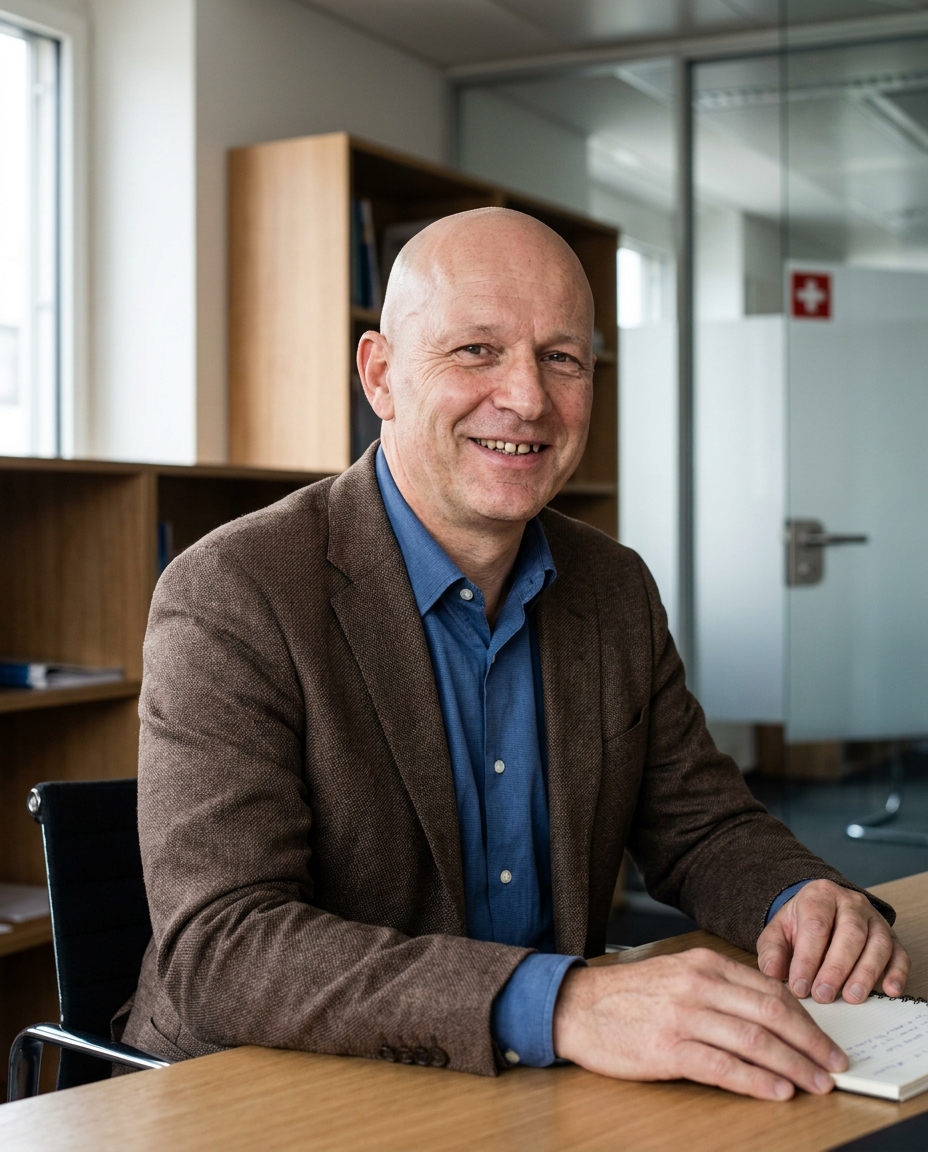
Stefan Brunner
Senior Legal Advisor
10 August 2026
7 min read
Switzerland is a tier-one destination for startup formation — not as a tax haven, but as a stable, treaty-connected jurisdiction with a mature legal system, a deep VC market, and two distinct innovation clusters: Crypto Valley in Zug and the ETH-anchored tech ecosystem in Zurich. The choice between the two is not merely a question of preference. It is a structural decision with lasting tax, talent, and regulatory consequences. This guide covers both ecosystems, compares the key formation variables, and explains when each location makes sense.
Why Switzerland for Startups?
Switzerland combines four properties that most jurisdictions offer only in isolation: political stability, tax competitiveness, research infrastructure anchored by ETH Zürich and EPFL, and a credible legal framework under FINMA supervision. The World Bank consistently ranks Switzerland among the top five countries globally for ease of doing business. The Swiss franc is one of the hardest currencies in the world. The federal political system distributes authority to cantons, meaning founders can select their canton based on tax rate, ecosystem fit, and cost — rather than having a single national rate imposed on them.
Swiss company law under the Code of Obligations (OR) was modernised in January 2023, introducing several founder-friendly changes: AG share capital can now be denominated in USD, EUR, or GBP rather than only CHF (OR Art. 621.2); conditional and approved capital thresholds were raised; and electronic signature of corporate documents was codified. These revisions reduced formation friction and improved capital-raising flexibility for international founders.
Switzerland's tax treaty network covers over 100 jurisdictions, providing access to reduced withholding tax rates on dividends, interest, and royalties. The participation exemption (DBG Art. 69 and 70) effectively eliminates Swiss corporate tax on qualifying dividend income and capital gains where a company holds at least 10% of the share capital or CHF 1,000,000 in market value of another entity. For holding structures and IP companies, this makes Switzerland a genuinely competitive domicile rather than simply a low-rate one.
Crypto Valley Zug: The Blockchain Capital of the World
The Crypto Valley Association was founded in 2017 to coordinate the blockchain and distributed ledger technology (DLT) ecosystem that had been forming in Zug since the mid-2010s, when the city became one of the first public authorities in the world to accept Bitcoin for administrative fees. In the decade since, the ecosystem has grown into the densest concentration of blockchain institutional activity on earth.
At the end of 2025, Switzerland hosted approximately 1,766 blockchain-related companies — an all-time high, more than double the 2020 count, according to the CV VC Top 50 Report 2026. Zug accounts for around 40% of that total (roughly 715 companies), with Zurich the second-largest hub at around 15% (roughly 257 companies). Crypto Valley attracted $728 million in blockchain funding in 2025, a 37% year-on-year increase, representing 47% of all European blockchain VC in that year.
The companies anchoring Crypto Valley are not speculative projects. They are protocol governance foundations and regulated financial institutions. Major organisations with registered domicile in Switzerland's Crypto Valley include the Ethereum Foundation (established in Zug in 2014), the Cardano Foundation (Zug), the Web3 Foundation governing Polkadot (Zug), the Tezos Foundation (Zug), the Interchain Foundation behind Cosmos (Zug), the DFINITY Foundation behind the Internet Computer (Zurich), AMINA Bank (formerly SEBA, among the first FINMA-licensed crypto banks, Zug), and Sygnum Bank (Zurich). As reported in the CV VC Top 50 Report 2026, the top 50 Swiss-based blockchain companies had a combined value of approximately $467 billion, including ten unicorns.
| Ecosystem metric | Figure (2025) | Source / note |
|---|---|---|
| Total Swiss blockchain companies | ~1,766 | CV VC Top 50 Report 2026 (end-2025) |
| Companies in Zug | ~715 (~40%) | Largest hub |
| Companies in Zurich | ~257 (~15%) | Second-largest hub |
| 2025 blockchain VC raised | $728 million | 37% year-on-year increase |
| Crypto Valley's share of European blockchain VC | 47% | CV VC Top 50 Report 2026 |
| Combined value of top 50 firms | $467 billion | 10 unicorns |
| Crypto Valley Association founded | 2017 | 850+ professional members |
The structural reason foundations and regulated crypto businesses cluster in Zug is threefold. First, Swiss foundation law (ZGB Art. 80 et seq.) provides a legally solid, non-profit governance structure with no shareholders and full legal separation of assets from founders — precisely what open-source protocol governance requires. Second, FINMA's technology-neutral, activity-based regulatory approach provides predictability: a company is assessed by what it does, not the technology it uses. Third, Zug's 11.71% corporate income tax rate means even large operating profits are retained efficiently. For blockchain companies in particular, Zug also offers a dense ecosystem of specialist lawyers, FINMA-experienced compliance officers, and crypto-friendly banking relationships — all within walking distance of Baarerstrasse.
For a detailed treatment of Crypto Valley formation mechanics, FINMA licensing requirements, and the DLT Act framework, see the Zug Crypto Valley guide.
ETH Zurich and the Zurich Tech Ecosystem
ETH Zurich (Eidgenossische Technische Hochschule Zurich) is ranked 7th globally in the QS World University Rankings 2026 — its 11th consecutive year in the global top 10 and consistently the highest-ranked Continental European university in science and technology disciplines. In 2024, ETH Zurich produced 37 new spinoff companies, continuing a decade-long upward trend that peaked at a record 43 spinoffs in 2023. Since 1973, over 583 ETH Zurich spinoffs have been founded, with a five-year survival rate of 93%.
This spinoff engine creates an unusual density of IP-rich, technically deep startup activity in the Zurich canton. ETH spinoffs span AI and machine learning, medical devices, robotics, materials science, cleantech, and quantum computing. Many remain in Zurich to maintain proximity to the university's laboratories, faculty advisors, and student talent pipeline. ETH's Technology Transfer Office actively commercialises research across these domains.
Zurich's broader tech ecosystem extends well beyond ETH. The city is headquarters for major Swiss financial institutions, global pharmaceutical players with R&D operations nearby, and a growing base of international tech companies that use Zurich as their European engineering hub. Google, Amazon, Meta, and Microsoft all maintain significant engineering presence in Zurich. This corporate tech density creates an unusually rich senior talent market for startups willing to compete on compensation.
Kickstart Innovation, Switzerland's largest multi-corporate accelerator, is based in Zurich. Its corporate partners include major Swiss institutions across financial services, food, energy, and technology sectors. Startups accepted into Kickstart gain access to corporate pilots, mentorship networks, and investor introductions — making it one of the most direct routes from early traction to enterprise customer validation in Switzerland.
The Switzerland Innovation Network connects startups with research institutions through a network of innovation parks. The Zurich area hub, and sites in Basel, Ticino, and Western Switzerland, offer co-location with university research groups, access to shared infrastructure, and facilitated industrial collaboration. For deeptech founders, this proximity to R&D infrastructure is often more valuable than the cantonal tax differential.
Zug vs Zurich: Tax and Cost Comparison
The tax difference between Zug and Zurich is one of the largest within the Swiss federal system and materially affects a startup's retained capital position from the first profitable year. Below is a direct comparison for 2026.
| Factor | Zug | Zurich |
|---|---|---|
| Combined CIT 2026 | 11.71% | 19.61% |
| Individual income tax | Among lowest in Switzerland | High — near cantonal maximum |
| Patent box (StHG Art. 24a) | Yes — up to 90% exclusion | Yes — up to 90% exclusion |
| R&D super-deduction (StHG Art. 25a) | Yes — up to 50% | Yes — up to 50% |
| Population (canton) | ~130,000 | ~440,000 |
| Key ecosystem | Crypto Valley, fintech, holding | Deeptech, AI, pharma, FinTech |
| University proximity | 30 min by train to ETH Zurich | ETH Zurich campus in city |
| Office costs (Grade A) | Lower than Zurich by 20-35% | High (CHF 500-700 / sqm pa) |
| Public transport links | Good — direct Zurich HB trains | Excellent — central European hub |
| Crypto / DLT specialist services | Dense ecosystem in Zug | Growing but thinner |
| Talent pool depth | Smaller; imports from Zurich | Large; ETH + tech multinationals |
On a CHF 1,000,000 annual net profit, the Zug entity retains approximately CHF 882,900 after combined tax (11.71%). The Zurich entity retains approximately CHF 803,900 (19.61%). The annual difference is CHF 79,000 — pure retained capital available for reinvestment. Over five years with flat profit, the cumulative gap approaches CHF 395,000 before any compounding effect. For a startup with growth trajectories common in tech and blockchain, the difference scales accordingly.
Individual income tax is a related consideration for founding teams who pay themselves a salary. Zug's personal income tax burden is among the lowest of any canton in Switzerland, making it attractive for founders who relocate there. This is a separate calculation from the corporate rate but affects total cost-of-talent for a Zug-domiciled team. For a detailed breakdown of Zug's combined tax rates, see the Zug tax rate guide and the Swiss taxes overview.
Funding: VCs, Angels, and Government Support
Switzerland's total venture capital market exceeded $3.6 billion across approximately 400 deals in 2023, with around 150 active VC firms. The main concentrations of VC activity are Zurich, Lausanne, and Geneva, though Zug-based fund managers are increasingly active in blockchain and fintech. Swiss VC has historically skewed toward later-stage and growth rounds rather than pure seed; the pre-seed and seed gap is partly filled by angel investors and government instruments.
Government programmes
Innosuisse (the Swiss Federal Innovation Agency) is the central government channel for startup support. Its principal instruments include:
- >Innovation Project Grants: cover 50 to 70% of project costs for startups collaborating with a Swiss academic partner institution.
- >Coaching Vouchers: CHF 10,000 (Initial), CHF 50,000 (Core), CHF 75,000 (Scale-up) — non-dilutive coaching support.
- >Accelerator Grants: up to CHF 2.5 million per startup via the Innosuisse accelerator programme.
- >Innovation Cheques: up to CHF 15,000 for feasibility studies with academic institutions.
Venture Kick is a non-dilutive Swiss startup funding competition providing up to CHF 150,000 across three progressive stages (CHF 10,000, CHF 40,000 and CHF 100,000), open to startups commercialising research from Swiss universities. The Federal Office of Energy (SFOE) runs a Pilot and Demonstration Programme for cleantech startups. Several cantonal development agencies offer additional matching grants and interest-free loans.
Angel networks
Swiss Business Angel Networks (SBAN) and SICTIC are the primary angel platforms. Individual Swiss angel investments typically range from CHF 25,000 to CHF 500,000. For seed rounds above CHF 500,000, angels increasingly co-invest through syndicates facilitated by SICTIC or one of the regional business angel networks. The quality of Swiss angels is high relative to the market size: many are former founders or executives from the Swiss technology and financial services sector, providing both capital and operational expertise.
Notable Swiss VC firms
Zurich-based funds with Swiss startup track records include Lakestar, Btov Partners, Swisscom Ventures, and several corporate venture arms of Swiss financial institutions. Zug-based and blockchain-specialist funds include CV VC (Crypto Valley Venture Capital), which has been among the most active early-stage blockchain investors in Europe. Helvetia Venture Fund and several family office vehicles are active across sectors. Swiss institutional investors (pension funds, insurance companies) have increasingly allocated to VC as a recognised asset class following FINMA guidance changes.
Key Support Organisations
| Organisation | Location | Focus |
|---|---|---|
| Crypto Valley Association | Zug | Blockchain ecosystem coordination, advocacy, events |
| CV VC | Zug | Early-stage blockchain VC fund; annual Top 50 report |
| Kickstart Innovation | Zurich | Switzerland's largest multi-corporate accelerator |
| Switzerland Innovation Network | National | University-linked innovation parks; deeptech co-location |
| Innosuisse | National | Federal innovation agency; grants and coaching |
| Venture Kick | National | Non-dilutive competition funding up to CHF 150,000 |
| SICTIC | National | Swiss angel investor platform; syndicate facilitation |
| ETH Zurich Tech Transfer | Zurich | ETH IP licensing, spinoff support, founder matching |
| Greater Zurich Area | Zurich | Inward investment promotion; relocation advisory |
| SECO / S-GE | National | Switzerland Global Enterprise — market entry support |
Incorporation and Regulatory Framework for Startups
Swiss company law under the Code of Obligations provides two principal startup vehicles: the Aktiengesellschaft (AG) and the Gesellschaft mit beschränkter Haftung (GmbH). Both are available in Zug and Zurich. The formation steps are identical regardless of canton; the canton determines only the tax rate and the commercial register office.
AG (Aktiengesellschaft)
The AG requires CHF 100,000 minimum share capital (OR Art. 621), with at least CHF 50,000 paid in at incorporation. Shareholders are not publicly listed in the Handelsregister — only directors appear in ZEFIX. Shares are freely transferable unless the articles impose restrictions (Vinkulierung). Electronic registration (introduced via the 2023 OR reform) reduced the statutory fee burden; costs are approximately CHF 1,900 to 2,000 for Handelsregister registration. The AG is the standard vehicle for startups seeking institutional investment, operating regulated activities, or building toward a future liquidity event.
GmbH (Gesellschaft mit beschränkter Haftung)
The GmbH requires CHF 20,000 minimum share capital (OR Art. 773), which must be fully paid in at incorporation — no phased option. All members (Gesellschafter) are publicly named in ZEFIX, which reduces privacy but eliminates the information asymmetry that can complicate due diligence on AG shareholder registers. Share transfers require a notarised deed. GmbH formation costs approximately CHF 1,800 to 2,000. It is preferred for single-founder businesses, smaller teams, and situations where simplicity of governance outweighs privacy considerations.
Residency requirement and nominee directors
Every Swiss AG must have at least one board member domiciled in Switzerland with individual signatory authority (OR Art. 718(4)). GmbH managing directors face the same requirement under OR Art. 814(3). Foreign founders who do not relocate satisfy this through a nominee director — a Swiss-domiciled professional who appears on the register while operating under a management agreement that limits their authority and protects the beneficial owner. Every company also requires a registered office (Sitz) in Switzerland before Handelsregister filing.
IP and patent box planning
Swiss startup founders developing proprietary technology should structure IP ownership carefully from formation. The patent box regime (StHG Art. 24a) allows cantons to exclude up to 90% of qualifying IP income from the cantonal taxable base — this applies to patents and equivalent rights. Both Zug and Zurich have adopted the patent box. Both cantons have also adopted the R&D super-deduction under StHG Art. 25a (up to 50% additional deduction on qualifying R&D personnel costs); in Zug it applies subject to an overall relief cap of 70% of taxable profit. As of 2026, all cantons except Basel-Stadt, Glarus, Lucerne, Schaffhausen and Uri grant the super-deduction. For more on holding company structures and IP planning, see the Swiss holding company guide.
Goldblum & Partner AG has been based at Baarerstrasse 25, 6300 Zug since 2007 — at the centre of Crypto Valley. We provide end-to-end company formation (AG and GmbH), FINMA licensing support for fintech and blockchain companies, and banking introductions for Swiss startups. Initial consultations are without charge. Speak with a formation advisor.
Talent and Recruitment in Switzerland
Switzerland's talent market is exceptional in depth but expensive. ETH Zurich and EPFL (Lausanne) together produce a flow of engineering, computer science, and natural science graduates that sustains the deeptech sector. Zurich's additional draw as a hub for Google, Meta, and other large tech employers means the senior engineering talent pool is uniquely concentrated — and also means startups compete for talent against organisations with very large compensation budgets.
Swiss employment law provides a relatively flexible termination regime compared to much of continental Europe — notice periods are typically one to three months and there is no statutory requirement for severance packages outside collective agreements. Social insurance contributions (AHV/IV/EO, unemployment, accident) add approximately 12 to 14% to employer payroll costs. Pension contributions under the occupational pension system (BVG) add further costs depending on the plan chosen.
Non-EU founders and employees seeking to work in Switzerland require a work permit. EU/EFTA nationals benefit from the Agreement on the Free Movement of Persons and face a streamlined process. Third-country nationals (non-EU/EFTA) must satisfy the foreign national law (AIG) requirements: the employer must demonstrate that no suitable candidate was found in Switzerland or the EU before a third-country hire can be approved. The cantonal immigration office manages the process; timeframes vary but typically run four to twelve weeks. Zug's small canton size means faster processing at the cantonal level compared to Zurich.
For blockchain and crypto companies specifically, Zug's international reputation attracts technically skilled founders and engineers who self-select for the ecosystem — reducing recruitment friction compared to recruiting crypto specialists into a conventional Zurich corporate environment.
Choosing Between Zug and Zurich
The decision framework is straightforward once a startup's primary requirements are identified.
Choose Zug when:
- >The business is in blockchain, DLT, digital assets, crypto custody, or token governance — Zug provides the most relevant specialist ecosystem in the world.
- >Tax efficiency is a primary structural objective — the 7.90 percentage point gap over Zurich is the widest within any pair of major Swiss cantons.
- >The company is a holding or IP company where the patent box and participation exemption are the main tax planning tools — Zug's low ordinary rate amplifies their effect.
- >The founding team plans to relocate or is prepared to use nominee director services — Zug's personal tax regime is competitive for relocated founders.
- >Banking access for non-resident fintech or crypto founders is a priority — Zug-based banks and Zug-experienced advisors provide a shorter path to account opening.
Choose Zurich when:
- >The company is a deeptech or life science spinoff from ETH Zurich and needs to maintain proximity to the research group, laboratory access, and the ETH tech transfer ecosystem.
- >Talent recruitment at senior level is a primary bottleneck and the company can compete on compensation — Zurich's talent density is unmatched in Switzerland.
- >The startup is targeting Swiss corporate pilot customers through Kickstart Innovation or similar corporate accelerator programmes located in Zurich.
- >The business model depends on co-location with Swiss university hospitals, pharmaceutical R&D infrastructure, or materials science facilities concentrated in the Zurich-Basel corridor.
- >The founding team is already settled in Zurich and relocation to Zug is not practical in the near term.
A third option, less commonly discussed, is a dual structure: an operating GmbH or AG in Zurich for day-to-day business and talent proximity, with a Zug holding company above it for IP ownership and dividend aggregation. This structure captures Zug's tax benefit at the holding level while retaining Zurich's talent market at the operating level. It adds corporate governance complexity and requires careful transfer pricing documentation under Swiss tax law, but for companies with meaningful IP and revenues above CHF 2 to 3 million annually, the structural cost is justified. For detail on this approach, see the Swiss holding company service page.

Practical Formation Steps for Swiss Startups
| Step | Timeline | Notes |
|---|---|---|
| Select canton and structure (AG or GmbH) | 1–3 days | Determines tax rate, disclosure requirements, and capital minimum |
| Regulatory activity assessment | 1–2 weeks | Confirm FINMA or other licence obligations before formation |
| Company name check via ZEFIX | 1 day | Name must be unique and not misleading (OR Art. 951) |
| Draft articles of association | 3–7 days | With notary and legal counsel; must include purpose, capital, governance |
| Capital deposit (blocked formation account) | 1–30 days | 1–3 days for residents; 5–30 days for non-residents (KYC/AML) |
| Notarial deed signing | 1 day | In person or via notarised and apostilled power of attorney (remote) |
| Commercial register (Handelsregister) filing | 7–14 business days | Legal entity comes into existence on date of registration |
| Operating bank account opening | 1–4 weeks | Post-formation CDD; crypto companies should approach Amina, Sygnum, Swissquote |
| Innosuisse / Venture Kick application (if applicable) | Ongoing | Most programmes have rolling or quarterly submission windows |
Formation of the legal entity (steps 3 to 7) typically takes 2 to 4 weeks for a GmbH and 3 to 6 weeks for an AG. For international founders without Swiss domicile, the main variable is capital deposit — cryptoasset and blockchain companies should budget additional time for bank KYC given the sector's elevated due diligence requirements. If speed is critical, Goldblum & Partner AG maintains shelf companies (pre-incorporated AG and GmbH units) that can be transferred within 24 hours. For the full formation process, see the Swiss company formation guide.
Further Reading
- >Swiss company formation — AG and GmbH requirements
- >Zug Crypto Valley: Why Switzerland's blockchain hub chose one of the lowest-tax cantons
- >Zug tax rate — combined corporate and personal rates explained
- >Swiss taxes overview — cantonal and federal rates
- >Swiss holding company structure — IP and dividend planning
- >Contact Goldblum & Partner AG — free consultation
FAQ
Frequently asked
questions
Precise answers to the most common questions about forming a company in Switzerland. For specific advice on your structure, book a free consultation.
Free consultation
Free Consultation
Ready to incorporate
in Switzerland?
Speak with a Zug advisor. We'll review your structure, recommend the optimal entity type, and outline the timeline. No commitment — no pricing barrier at entry.
Baarerstrasse 25 · 6300 Zug · Switzerland · Est. 2007